
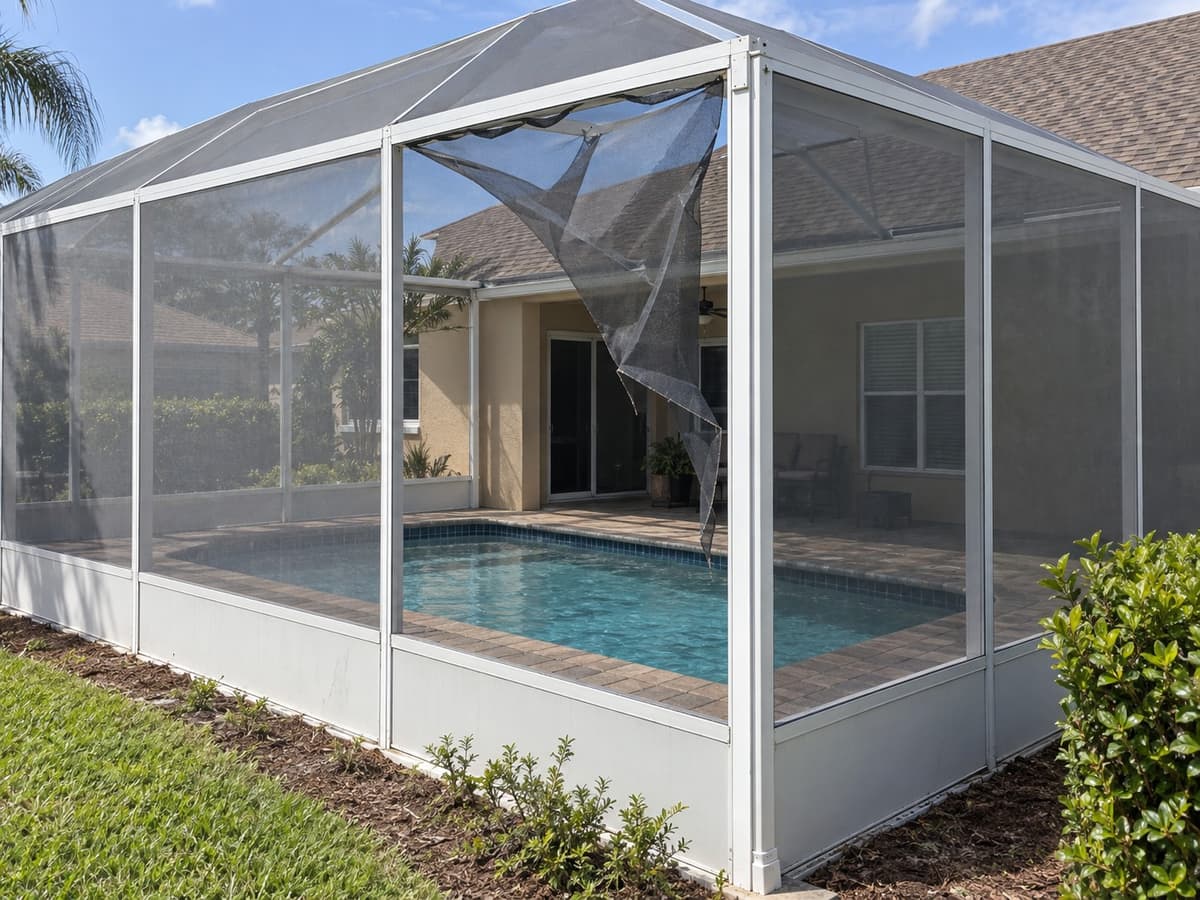
Most rescreening needs aren't emergencies. They start when the screen sags, the roof panels have holes, or bugs get in anyway, and the pool gets used less. Here's what the job involves and what your contractor checks first.
What new screen changes about your pool
A pool cage exists to keep bugs, leaves, and debris out so the pool is ready when you are. As screen ages, it loosens in its channels, tears along the edges, and lets in exactly what it was supposed to block. The result is more skimming, more bites, and fewer evenings outside. Fresh, tight screen puts the enclosure back to work.
Why the frame decides whether rescreening is the right job
Worn screen tells you it's time to act, not what the job is. That depends on the aluminum frame: a straight frame, sound fasteners, and footings that haven't moved make a good rescreening candidate. Bent uprights, corroded hardware, or a frame that has racked out of square point toward repair or replacement first, because new screen on a failing frame won't last. Your contractor walks you through that in person and explains why.
Choosing the screen that fits how you use your pool
Rescreening is a chance to choose better mesh, not just new mesh. Common options include:
- 18×14 standard screen. The everyday choice, with good airflow and a clear view out.
- 20×20 no-see-um screen. A tighter weave with openings small enough to stop the tiny biting midges that breed in Florida's coastal areas.
- Pet screen. A heavier, tear resistant mesh, often used on lower panels where dogs and cats push against it.
- Tuff screen. A heavy duty mesh for panels that take bumps from furniture, kids, or yard equipment.
- Solar shade screen. A denser weave that cuts heat and glare on sun facing walls, with some tradeoff in visibility.
Many enclosures mix types, such as standard screen on the roof and pet or tuff screen down low. Your contractor can explain the tradeoffs.
What the contractor checks before recommending a rescreen
During the in person evaluation, your contractor typically looks at:
- The frame. Straight uprights and beams, square corners, and no signs of shifting.
- Fasteners and hardware. Rust, corrosion, or loose connections.
- Footings and anchors. Whether anything has lifted or moved.
- Screen channels and spline. Whether the channels will hold new screen tightly.
- Doors and closers. Alignment, latches, and hinges.
- Kick plates and gutters. Where screen meets the lower frame and roof line.
You describe what you've noticed. The contractor handles the technical judgment.
Full rescreen or just the damaged panels?
If a few panels are torn and the rest are in good shape, replacing only those panels can make sense. When screen across the enclosure is sagging, brittle, or pulling free, a full rescreen usually gives a more even, longer lasting result. New panels next to weathered ones can also look different in color and tension.
Permits and cost
Rescreening an existing enclosure is exempt from permits in most cases; frame work, replacement, or a new enclosure typically needs one. Cost depends on the size and height of the enclosure, the screen you choose, the number of doors, and whether any repairs are needed first. Our rescreening cost guide lays out typical planning ranges and local permit fees. The contractor's written proposal sets the price for your property.
Frequently asked questions
Do I need a permit to rescreen my pool cage?
In most cases, no. Rescreening an existing enclosure is typically exempt from permits. If the evaluation turns up frame repairs or the job becomes a replacement, a permit usually applies, and your contractor handles it with the permit office that serves your address.
How long does new pool screen last?
It depends on the material and the exposure. In Florida sun, standard fiberglass screens generally last about 7 to 12 years, while heavier duty pet and tuff screens often last longer. Strong sun, salt air, pets, and storms can all shorten that.
Do I need to send photos?
No. Photos aren't required. In some cases, the contractor may ask for a wide view and a close view of the problem area before an in person evaluation.
Which screen is best for my pool?
It depends on what bothers you most: bugs, pets, heat, or wear. No-see-um screen helps with tiny biting insects, pet and tuff screen hold up to contact, and solar shade cuts glare.