
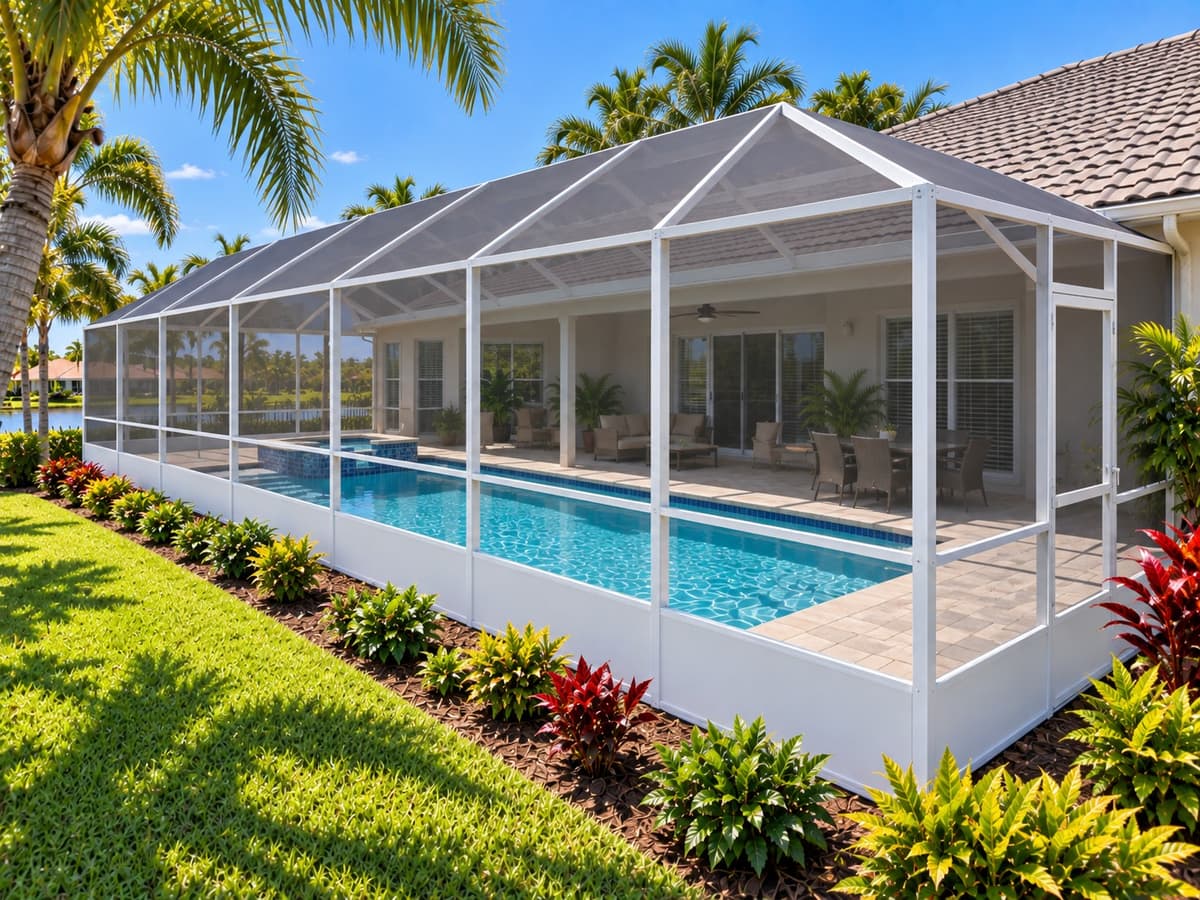
Torn screen doesn't automatically mean you need a new enclosure. Here's how a contractor actually weighs a rescreen against repairs against replacement, so you know what to expect before anyone visits.
What the contractor weighs
The condition of the frame and its connections matters most: is the aluminum straight, are the fasteners sound, have the footings held their position. From there, it's a comparison, not a formula. The contractor looks at the extent of the damage, what can be kept as is, what you want from the space, and how the options stack up in cost and value for your property. You come away understanding the comparison, not just a verdict.
What each option means
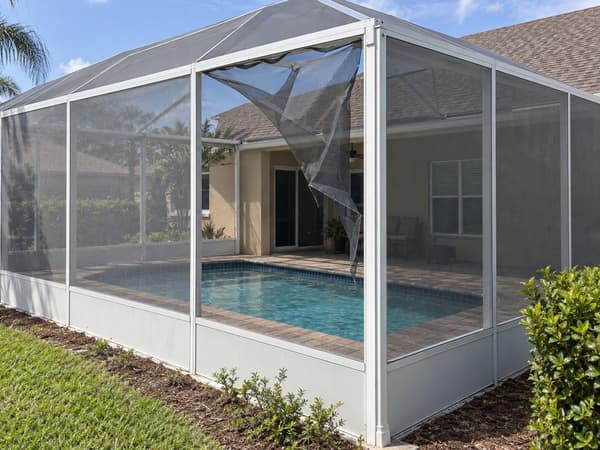 Rescreen. New screen goes onto a sound frame. It's the most common answer for an aging enclosure, and it typically doesn't need a permit.
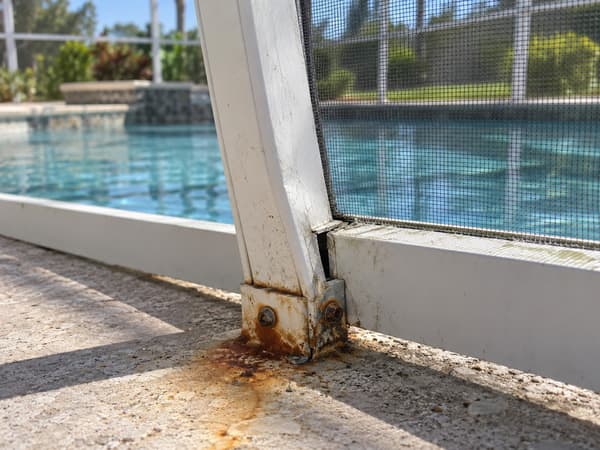 Repair. The contractor fixes what's wrong with the structure first, such as bent members, loose or corroded fasteners, doors, bracing, or anchors, and then rescreens where needed. Frame work typically needs a permit.
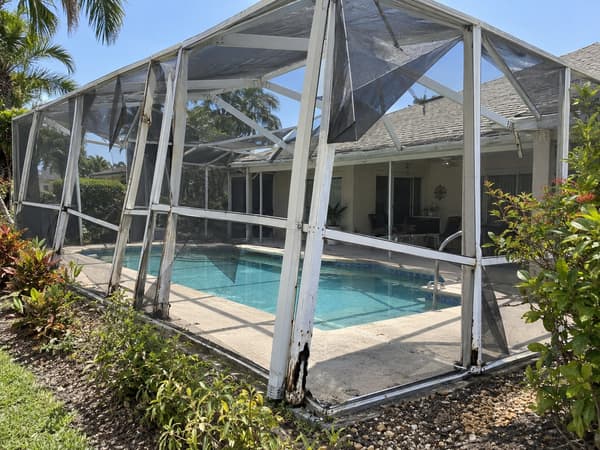 Replace. The old enclosure comes down and a new, engineered one goes up. That always involves a permit, and it gives you a chance to rethink the roof style, doors, and screen.


Why the screen can fool you
A cage with shredded screen can still have a straight, solid frame. A cage with intact screen can still have a bent beam or an anchor that has pulled loose. Screen condition tells you it's time to call. It doesn't tell anyone what the job is, which is why the contractor looks past it.
What the contractor looks at
- Uprights and beams: straight, or bent and buckled
- Corners and overall shape: square, or racked
- Fasteners and connections: sound, or rusted and loose
- Footings and anchors: stable, or lifted and shifted
- Screen channels: able to hold new spline tightly
- Doors: swinging, closing, and latching properly
You don't need to judge any of this yourself. Describe what you've noticed, when it started, and whether a storm was involved.
When repair costs start to add up
Fixing several beams, replacing hardware, and rescreening can add up quickly, and cost is a real part of the decision. As repair costs climb toward half or more of what a comparable new enclosure would cost, most homeowners start seriously weighing replacement instead, especially if the frame has other problems too. It isn't an automatic line, and it isn't the only thing that matters. A frame with one bad corner and everything else sound is a different conversation than one with corrosion throughout. Your contractor's written proposal, with the actual scope and price for your enclosure, is what makes the comparison real.
Age matters less than condition
An older frame that is still straight and solid can carry new screen for years. A newer one bent by a storm may not. That's why the answer is never "it's old, so replace it" or "it's new, so just rescreen." What the evaluation finds is what decides.
Permits follow the path
Rescreening an existing enclosure is exempt from permits in most cases. Frame repairs and replacement typically need one, from the office that serves your address. Our permits guide covers who handles what in Hillsborough and Pinellas, and what it costs.
Frequently asked questions
Can I rescreen now and deal with the frame later?
If the frame has problems, new screen on it won't last, and it may need to come off again for the repair. The contractor can tell you whether anything structural needs to happen first.
Is an older enclosure automatically a replacement?
No. Condition decides, not age. Plenty of older frames are straight and sound.
Does an insurance claim change the decision?
Your insurer makes its own decisions about coverage. The contractor's evaluation and written scope describe what the structure itself needs.
Who makes the final call?
You do. The contractor explains the options and puts them in a written proposal, and you decide how to proceed.
Related pages
Sources reviewed
All sources were reviewed in October 2026.
- HomeAdvisor, Pool Enclosure Cost, updated June 17, 2026