
Getting an estimate shouldn't feel like a project of its own. Here's how the process works with Florida Screen Enclosure Services, and what a good estimate should give you.
Your first request can be simple
You don't need measurements, product names, or a diagnosis. The city or area, the type of enclosure (pool cage, lanai, patio, porch, or screen door), and a sentence or two about what you're seeing or planning is enough to start. Describe it the way you'd explain it to a neighbor.
We make one direct connection between you and the contractor
We confirm where the property is and connect your request to the one trusted local contractor serving that county. It isn't sent to a list of companies, so you won't be harassed by a hundred sales calls.
The contractor reaches out to discuss your needs and set up a time. Photos aren't required, but the contractor may ask for a wide view of the enclosure and a close view of the problem area first. For a new enclosure, it can help to have a property survey handy, along with any HOA guidelines if your community has them.
What happens during the evaluation
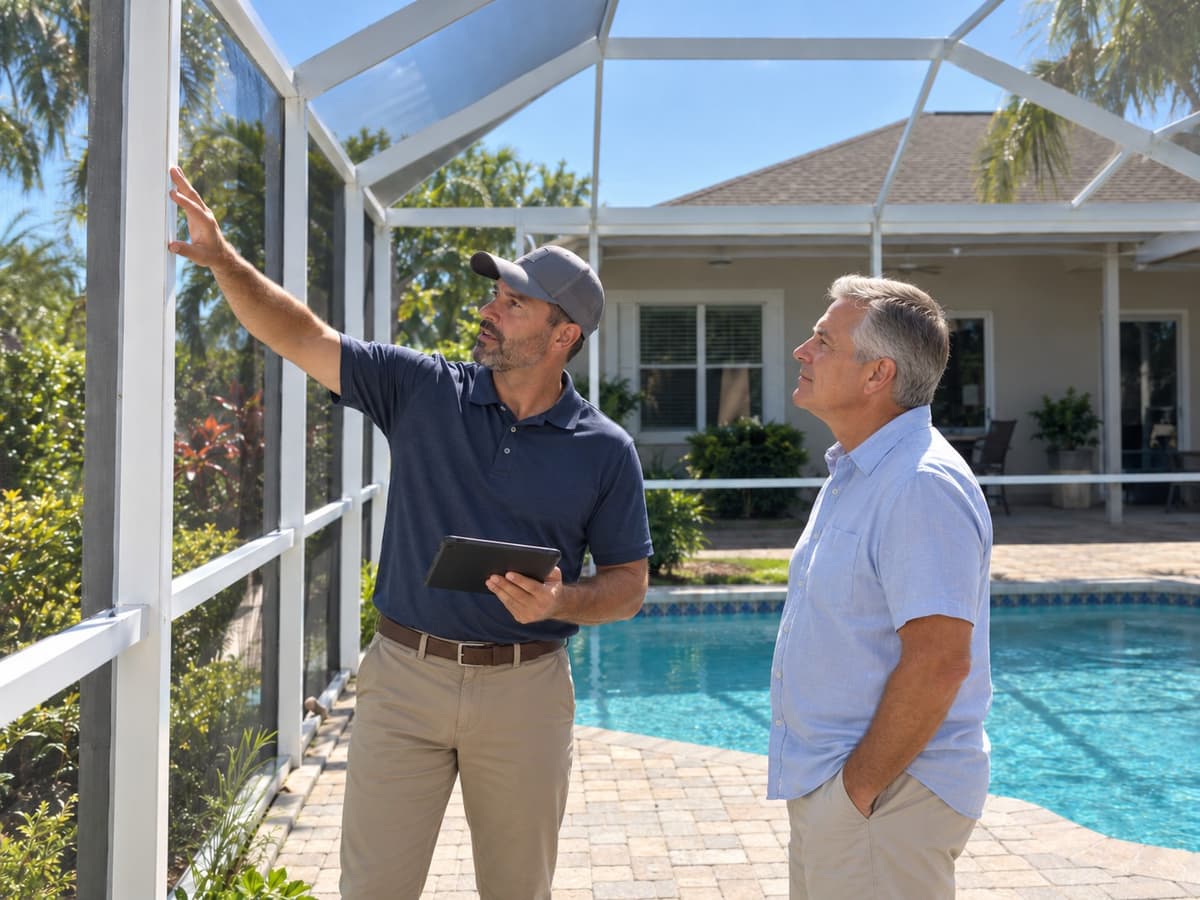
For an existing enclosure, the contractor typically checks the frame for straightness, the fasteners and connections, the footings and anchors, the screen channels, and the doors. That's how they decide between rescreening, repair, and replacement. For a new enclosure, the visit focuses on measurements, the patio or slab, where footings can go, the roofline where the cage meets the house, and setbacks.
What a useful proposal should explain
A good written proposal makes it easy to see exactly what you're paying for. Look for:
- The scope of work, including any repairs found during the evaluation
- Screen types for each area, such as roof, walls, and lower panels
- Doors, kick plates, gutters, and other components
- Whether a permit is needed, and who is pulling it
- Engineering or signed plans, for new enclosures
- The expected schedule and what could affect it
- The payment schedule
- Warranty terms, in writing
- Cleanup, debris removal, and removal of an old enclosure, if any
Florida rules worth knowing before you sign
You can look up any Florida contractor's license through the Department of Business and Professional Regulation. If a contractor takes a deposit of more than 10 percent of the contract price on a residential job, Florida law requires them to apply for any needed permits within 30 days of payment and to start work within 90 days after those permits are issued, unless you agree in writing to a longer timeline.
How to compare proposals fairly
If you're comparing more than one proposal, make sure they describe the same work. A lower number that leaves out repairs, doors, a permit, or screen upgrades isn't really lower. When a proposal uses square footage, ask how it was measured, since prices use different measurements. Our cost guides explain why that matters.
What an estimate can't promise
An in person evaluation catches most issues, but not everything. Hidden damage can turn up once old screen or components come off, permit review times vary by office, and weather can shift a schedule. A good proposal explains how those situations are handled.
Frequently asked questions
Will I get a firm price from photos alone?
Usually not. Photos can help the contractor prepare, but the frame, fasteners, and footings need an in person look before a reliable proposal can be written.
Do I need to know which permit applies before I ask?
No. The contractor determines whether a permit is needed, which office handles your address, and files it.
What should I ask before accepting a proposal?
Ask whether the contractor is licensed (ours are), whether a permit is included and who pulls it, what the schedule and payment terms are, and what the written warranty covers.
Does the request commit me to anything?
No. Sending a request starts a conversation with the local contractor. You decide whether to move forward after reviewing the written proposal.