
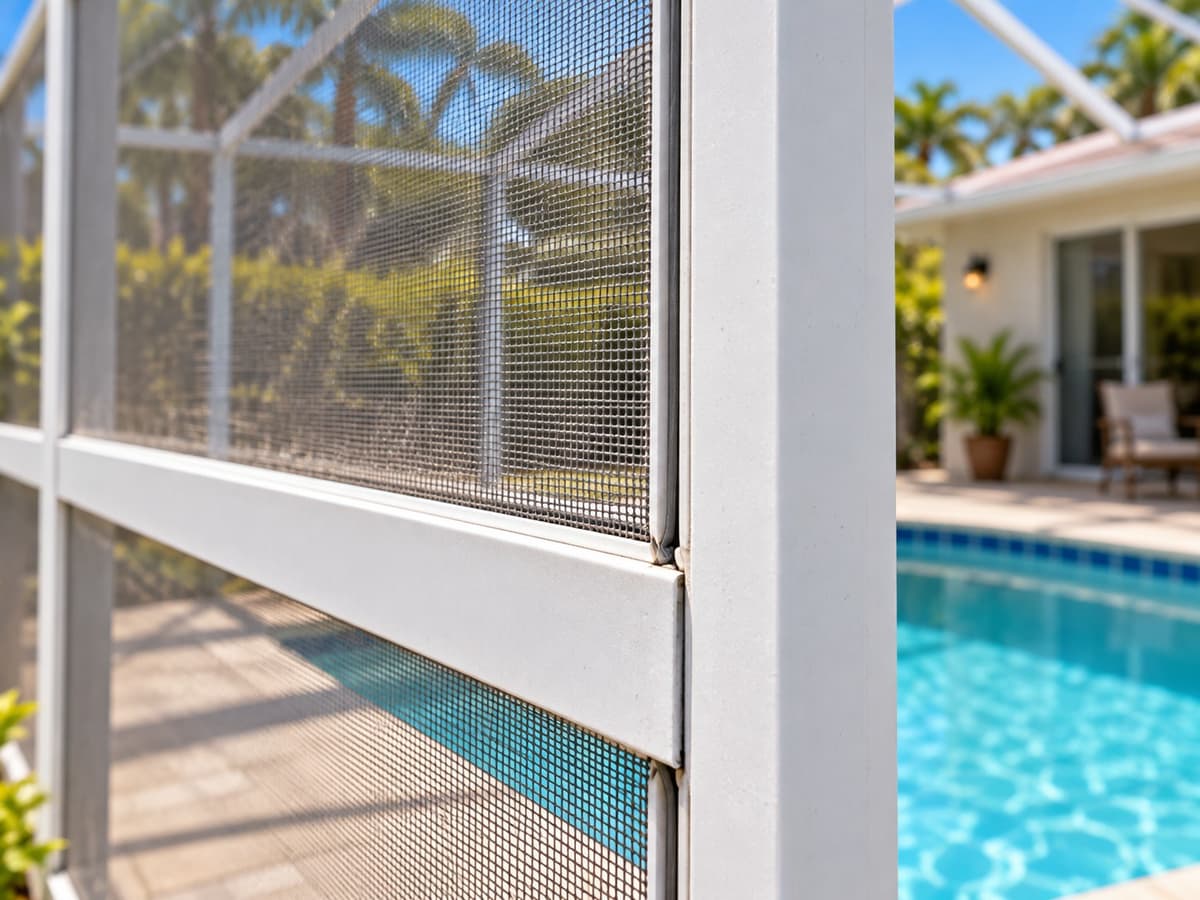
You don't need a ladder or a trained eye to know your screen is wearing out. Most of the signs show up in how the space looks and how it feels to use.
Signs you can see
- Sagging or billowing. Screen that used to be tight now moves in the wind or droops between frame members.
- Pulling out of the channels. Screen separating from the frame, with the spline showing or missing.
- Tears and holes. Especially in roof panels, which catch falling branches and debris.
- Fading or a chalky, whitish look. Screen "turning shiny white" is a common sign of wear.
- Unraveling edges. Fraying where the screen meets the frame.
Signs you feel in daily life
- More leaves and debris in the pool than there used to be
- More bugs inside the cage, especially at dusk
- Spending less time in the pool or on the lanai because it just isn't comfortable
That last one is the sign most people notice first, and it's a perfectly good reason to look into rescreening.
How long screen usually lasts
In Florida sun, standard fiberglass screen typically lasts about 7 to 12 years and 20×20 no-see-um screen about 7 to 10. Pet screen and tuff screen are heavier duty and often last 10 to 15 years, and how long solar shade screen lasts depends on the product, so ask your contractor what to expect. Pool cages typically last 10 to 20 years before needing rescreening. Strong sun, salt air, pets, and storms can all shorten those numbers.
Roof panels usually go first
Roof panels face the most direct sun and collect leaves and debris, so they often show wear before the walls do. Lower wall panels take the most contact from pets, furniture, and kids, which is why heavier pet screen or tuff screen is worth considering there.
Not all bugs are a screen failure
If tiny biting insects get in even though your screen looks fine, the screen may simply be too open for them. UF/IFAS notes that several species of biting midges, the no-see-ums, breed in Florida's coastal marshes, swamps, and mangroves, and that no-see-um screens have openings small enough to keep them out. Switching to 20×20 no-see-um screen is one option to ask about.
Signs worth mentioning to a contractor
Some things you notice may point past the screen. You don't need to figure out what they mean, just mention them:
- A door that no longer closes or latches the way it used to
- Part of the enclosure that looks out of line or leaning
- Rust stains or loose pieces after a storm
- Screen that tore suddenly in one area after high winds
The contractor checks the frame, fasteners, footings, and doors before recommending new screen.
Full rescreen or just a few panels
If damage is limited to a few panels and the rest of the screen is in good shape, replacing just those panels can make sense. If the screen is aging across the board, a full rescreen usually gives a more even, longer lasting result, and new panels next to old ones can look noticeably different.
Frequently asked questions
Does faded screen still do its job?
It can for a while, but fading often comes with brittleness. Once screen starts tearing easily or pulling loose, it's time.
Is one small hole worth fixing?
Bugs only need a small gap. A single torn panel is often an inexpensive repair, and it can be combined with other small fixes in one visit.
How do I know if it's the screen or the frame?
You don't have to. Describe what you're seeing, and the contractor evaluates the frame before recommending anything.
Do I need a permit to rescreen?
In most cases, no. Rescreening an existing enclosure is typically exempt from permits.
Related pages
Sources reviewed
All sources were reviewed in October 2026.
- HomeGuide, Pool Screen Repair Cost, dated September 6, 2023