
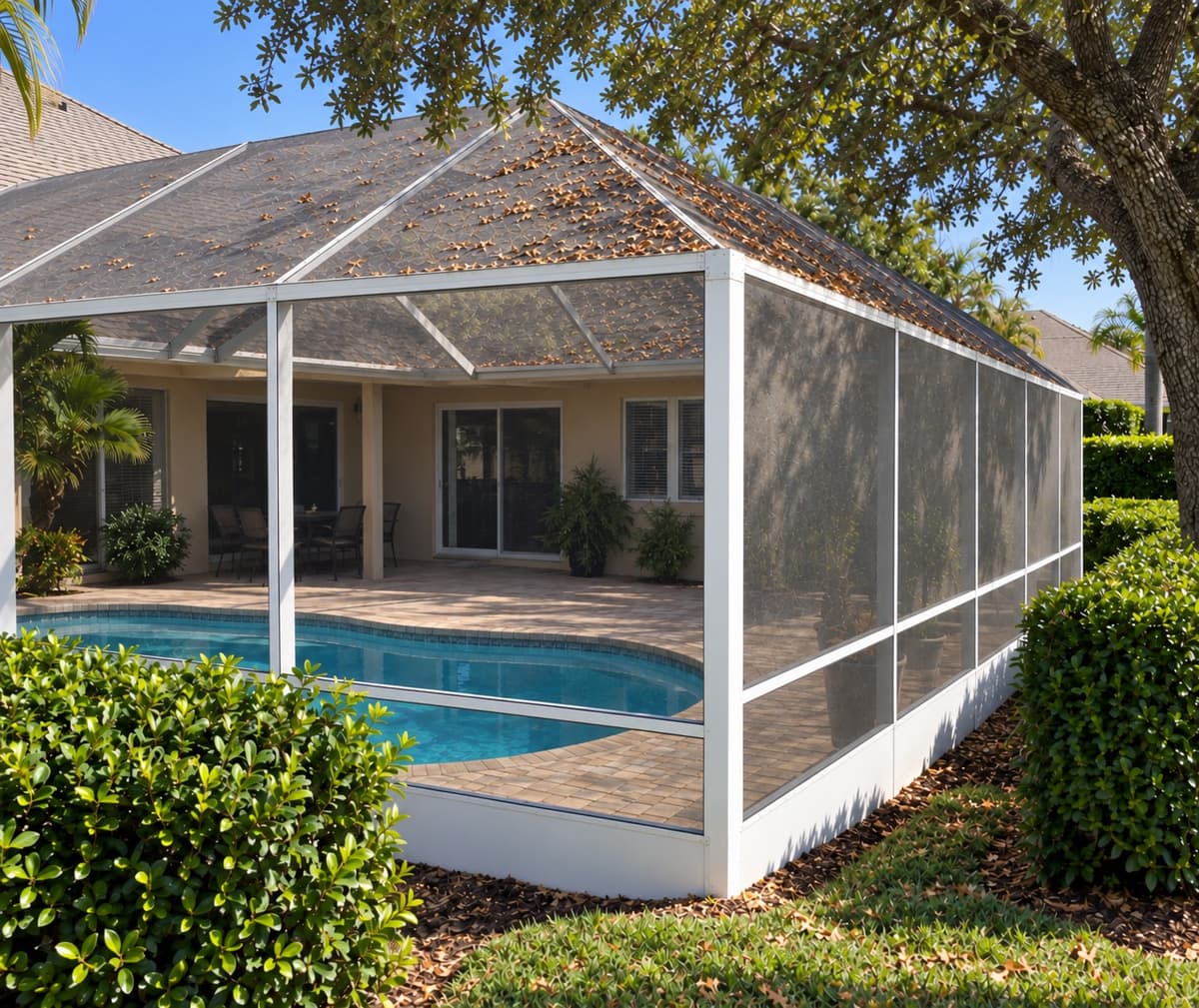
If your pool gets less use than it used to because of bugs, leaves, or screen that sags, rescreening may be the fix. It starts with what the screen is attached to.
Why the frame gets checked first
Worn screen tells you it's time to call, not what the job is. That's why the contractor looks harder at the frame than at how old the cage seems. A straight frame, sound fasteners, and stable footings mean new screen will last. Bent members, corroded hardware, or a racked frame mean repairs come first.
What the contractor checks
- Uprights and beams for straightness
- Corners for square
- Fasteners and connections for rust, corrosion, or looseness
- Footings and anchors for any movement
- Screen channels for whether they'll grip new spline
- Doors for how they swing, close, and latch
You don't need to diagnose anything. Tell the contractor what you've noticed and how long it's been going on.
Choosing mesh for how you use the pool
Rescreening is a chance to choose screen that fits how you use the pool today.
- Solar shade screen on the west or south walls cuts afternoon heat and glare.
- Pet screen on the lower panels holds up to dogs and cats.
- Tuff screen handles bumps from patio furniture and kids.
- 20×20 no-see-um screen keeps out tiny biting midges.
- 18×14 standard screen keeps the view and airflow open.
Permits in Brandon
Brandon is unincorporated, so any permit goes through Hillsborough County's building department. Rescreening an existing enclosure is exempt from permits in most cases. If the evaluation turns up frame repairs or a replacement, the county lists a flat $380 residential permit for pool enclosures and screen rooms, plus state surcharges, and your contractor handles it.
What rescreening typically costs
Our rescreening cost guide lays out typical ranges. As one national example, a single story cage over a 15 by 30 foot pool typically runs $900 to $2,100, while $1,500 to $3,500 is typical for a 20 by 40 foot pool. Screen upgrades, doors, height, and any repairs move the actual price. The contractor's written proposal sets it for your cage.
How to get started
Send one request with a short description of what you're seeing. We connect you to our trusted local contractor serving Brandon and the rest of Hillsborough County, who discusses your needs and schedules an in person evaluation. Photos aren't required, but the contractor may ask for a wide view and a close view first.
Frequently asked questions
Can our cage still be rescreened?
Often, yes. If the frame is straight, the fasteners are sound, and the footings haven't moved, it's a rescreening candidate. The contractor confirms it on site.
Do I need a Hillsborough County permit to rescreen?
In most cases, no. A permit usually applies only when the job includes frame repairs, replacement, or a new enclosure.
Is it worth upgrading from standard screen?
It depends on what bothers you. Solar shade helps with heat and glare, pet and tuff screen hold up to contact, and no-see-um screen stops tiny biting insects.
Should we rescreen the whole cage or just a few panels?
If only a few panels are damaged, panel replacement can work. On an older cage where screen is aging everywhere, a full rescreen usually gives a more even result.
How long will the job take?
It depends on the cage's size and height, the screen you choose, and whether repairs come first. The contractor lays out the schedule in the proposal.
Related pages
Sources reviewed
Cost figures on this page were reviewed in October 2026.
- HomeGuide, Pool Screen Repair Cost, dated September 6, 2023