
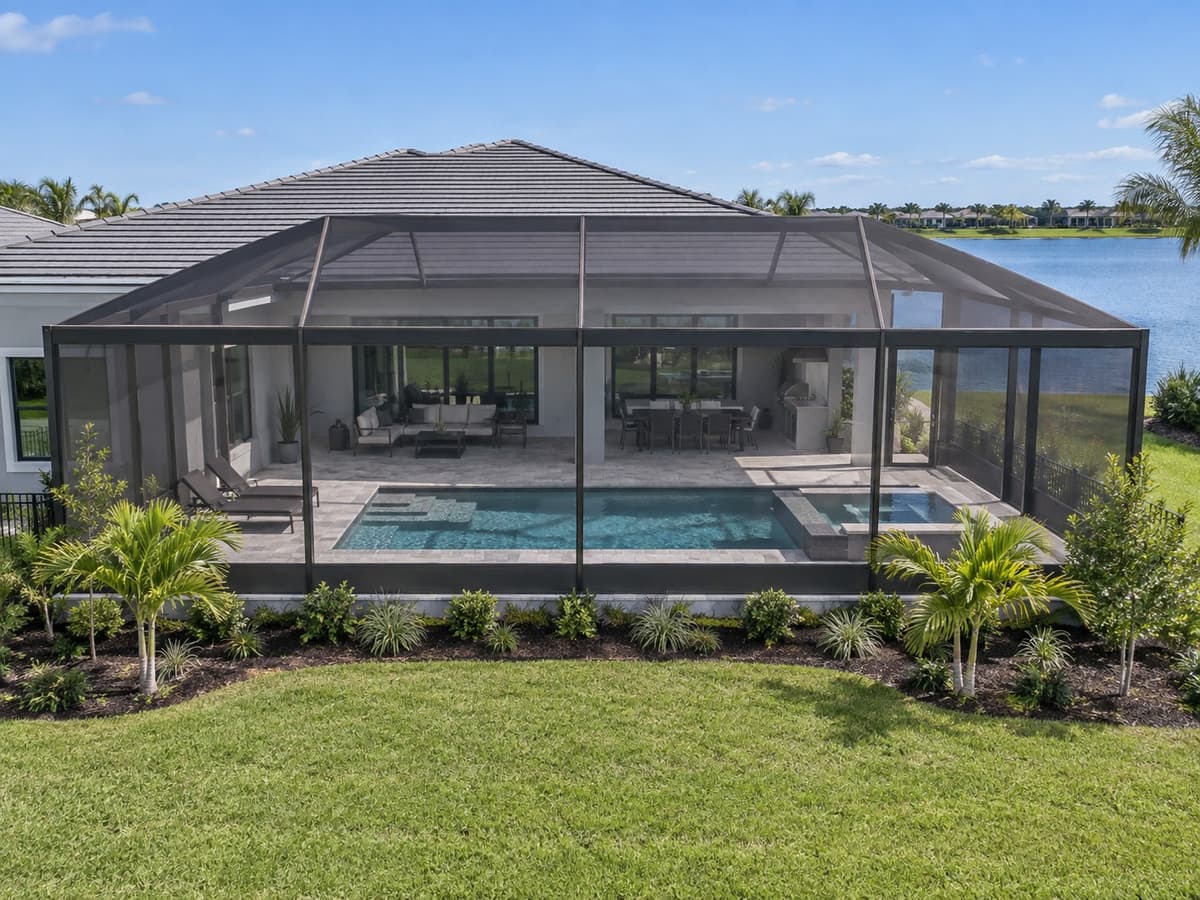
An enclosure can help keep leaves, debris, and bugs out of the pool while preserving the view and the way you use the space. Start with what you want from your backyard, and the contractor can discuss the layout, screen choices, and approvals that shape the project.
Planning around a new pool
If your pool is still being built, or was just finished, the enclosure is easier to plan when the pool patio, the footings, and the connection to the house are thought through together. Let the enclosure contractor know where the pool project stands, and share any plans or surveys you have if they're handy. They'll tell you what they need and when.
What a screened cage adds
A screened cage keeps leaves, debris, and bugs out of the water, which means less cleaning and more time actually using the pool. It also turns the patio around your pool into living space you can use most of the year.
Design decisions
- Roof style: mansard, dome, gable, hip, or flat, depending on your roofline and how much height you want
- Screen: 18×14 standard for airflow and views, 20×20 no-see-um for tiny biting midges, pet or tuff screen for lower panels, and solar shade for sunny walls
- Frame finish: bronze and white are common choices
- Extras: doors, kick plates, and gutters where the cage meets the house
Approvals and the county permit
Many communities in the area have an HOA or deed restrictions, and architectural approval usually comes before the permit application. Wimauma is unincorporated, so the building permit goes through Hillsborough County, which lists a flat $380 residential permit for pool enclosures and screen rooms, including a $50 application fee, plus state surcharges. The county's checklist calls for plans signed and sealed by a Florida registered architect or engineer, a site plan with setbacks and easements, and a recorded Notice of Commencement before the first inspection. Your contractor prepares the plans and handles the permit filing.
Pool safety from day one
Florida's building code allows a standard screen enclosure to serve as part or all of a pool's safety barrier, and Florida's pool safety law calls for pool access gates that open outward, close on their own, and latch automatically. Planning the doors correctly from the start is simpler than changing them later.
Budgeting for your enclosure
Our installation cost guide collects typical ranges, such as $8 to $15 per square foot for screen enclosures nationally. Roof style, height, doors, and screen upgrades move the actual number, and the contractor's written proposal sets the price for your project.
Frequently asked questions
Can the enclosure be planned while the pool is being built?
Yes, and it often helps. Tell the contractor where the pool project stands so the pool patio, footings, and connection to the house are considered together.
Do I need a permit for a new pool cage in Wimauma?
Yes. A new enclosure requires a Hillsborough County building permit, which your contractor handles.
What does the permit cost?
The county lists a flat $380 residential permit for pool enclosures and screen rooms, plus state surcharges.
Our community has an HOA. What comes first?
Usually the HOA's architectural approval, then the county permit. The contractor can tell you what each one needs.
Do you serve Sun City Center and Balm too?
Yes. The same local contractor serves all of Hillsborough County.
Related pages
Sources reviewed
Cost figures on this page were reviewed in October 2026.
- HomeAdvisor, Pool Enclosure Cost, updated June 17, 2026
- HomeGuide, Pool Enclosure Cost, dated September 6, 2023